
What players say
Cube Leap Platform Run offers a straightforward but satisfying puzzle platforming experience. The 3D courses are well-designed, with each level introducing new obstacles that require thoughtful navigation. The simple controls make it accessible to all ages, while the increasing difficulty provides a steady challenge. The blocky graphics are clear and easy on the eyes, and the browser-based play means no downloads are needed. It is a solid choice for anyone looking for a quick, brain-teasing session.
About this game
Core Movement & Timing
In Cube Leap Platform Run, the primary action is jumping. Players click or tap to make their block character leap from one platform to the next. The challenge lies in judging the distance and timing of each jump. Gaps between platforms vary in width, and some platforms are moving or angled, requiring precise input. There is no run button or complex combo system; success depends entirely on your ability to observe and time your actions correctly.
Level Structure & Progression
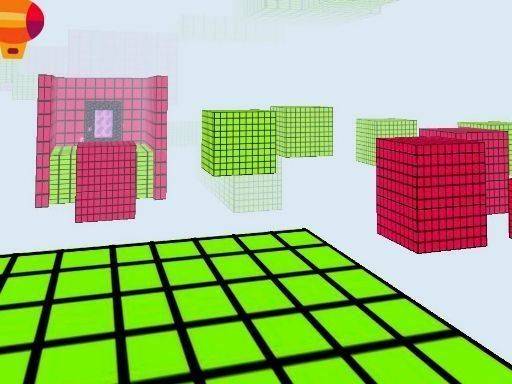
The game features a series of 3D levels, each designed as a unique obstacle course. Early levels introduce basic gaps and simple walls to teach the jump mechanic. As you advance, new elements appear, such as platforms that move horizontally or vertically, and walls that must be bounced off to reach higher areas. The difficulty increases gradually, ensuring that players build their skills step by step. Each level ends at a clearly marked finish line.
Visual Design & Accessibility
The graphics use a clean, blocky art style with bright colors and simple shapes. This design choice makes obstacles easy to distinguish from the background, reducing visual confusion. The game runs smoothly in a web browser on computers, tablets, and smartphones. Controls are responsive on both mouse and touch inputs, allowing for consistent play across devices. The family-friendly aesthetic means there is no violent or inappropriate content.
Strategic Approach & Player Mindset
Success in Cube Leap Platform Run comes from careful observation and patience. Rushing through a level often leads to mistakes. Instead, players benefit from pausing to study the layout of each course before moving. Understanding the pattern of gaps and moving platforms allows you to plan a route. Trial and error is part of the experience; each failure teaches you something about the level's design. Short practice sessions help improve your spatial awareness and reaction time.








Player comments
Sign in to comment
You must be logged in before posting a review or rating.
No account? Create one
No comments yet. Be the first to comment!