
What players say
Spiral Drop: Fruit Tower succeeds by focusing on one core mechanic and executing it well. The rotating tower creates a satisfying spatial puzzle, and the fruit platforms add visual charm. Difficulty ramps up steadily, keeping each run fresh without becoming overwhelming. The lack of complex features keeps the experience pure and addictive. It is an excellent choice for quick gaming sessions.
About this game
Core Gameplay Loop
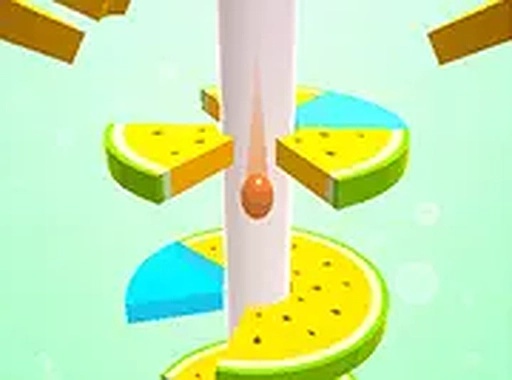
Spiral Drop: Fruit Tower centers on a single, elegant mechanic: rotating a towering helix to create a clear path for a descending character. Players click and drag to spin the tower, aligning gaps in the spiral with the character's position. Each successful landing on a fruit platform produces a satisfying visual pop, and the character drops to the next level. The challenge lies in judging the tower's rotation speed and the character's fall rate, requiring careful observation and precise input. This loop of rotate, align, and drop forms the foundation of every session, making each attempt a test of hand-eye coordination.
Visual Design and Atmosphere
The game presents a bright, vibrant world dominated by a single, twisting tower. Each platform is designed to resemble a different fruit, from strawberries to watermelons, adding a playful and appetizing aesthetic. The background remains simple, ensuring the player's focus stays on the tower and the character. The color palette shifts subtly as players progress, introducing new hues without becoming distracting. This visual clarity helps players quickly identify safe landing zones and hazardous areas, supporting the game's fast-paced nature. The overall look is clean and inviting, appealing to both younger and older audiences.
Obstacle and Difficulty Curve
As players descend, they encounter colored obstacles that block certain sections of the spiral. Touching these obstacles ends the current run, forcing a restart from the top. Early levels feature few obstacles and wide gaps, allowing newcomers to learn the controls. Later stages introduce more frequent and tightly spaced hazards, demanding quicker reactions and more precise rotations. The difficulty increases gradually, ensuring players feel a sense of progression. Each failed attempt provides a learning opportunity, as players memorize obstacle patterns and refine their timing. This structure keeps the experience challenging without becoming frustrating.
Session Structure and Replay Value
Each run in Spiral Drop: Fruit Tower is self-contained, lasting anywhere from a few seconds to several minutes depending on player skill. There is no save system or checkpoint progression; every attempt starts from the beginning. This design encourages repeated play, as players strive to beat their previous best descent. The game does not include a formal level select or story mode, focusing instead on the pure challenge of navigating the tower. This pick-up-and-play structure makes it ideal for short breaks, as players can complete multiple runs in a single sitting. The lack of complex menus or tutorials means the action starts immediately upon launching the game.
Controls and Accessibility
Spiral Drop: Fruit Tower uses a single control method: mouse click and drag. This intuitive input allows players of all ages and skill levels to start playing without reading instructions. The mouse controls the rotation of the entire tower, with the character moving independently. This separation of control and action adds a layer of strategic depth, as players must coordinate their mouse movements with the character's automatic descent. The game does not require keyboard input or complex button combinations, making it accessible on a wide range of devices. The responsive controls ensure that every rotation feels direct and immediate, reinforcing the game's focus on precision.









Player comments
Sign in to comment
You must be logged in before posting a review or rating.
No account? Create one
No comments yet. Be the first to comment!