
What players say
Beam Maze Navigation Puzzle offers a focused puzzle experience built around a single core mechanic. The gradual introduction of new beam patterns keeps the challenge steady without becoming overwhelming. Controls are responsive and the minimalist visuals help players concentrate on solving each maze. The absence of timers or scoring removes pressure, making it ideal for casual play. It is a well-designed game for anyone who enjoys logic puzzles and pattern recognition.
About this game
Core Concept
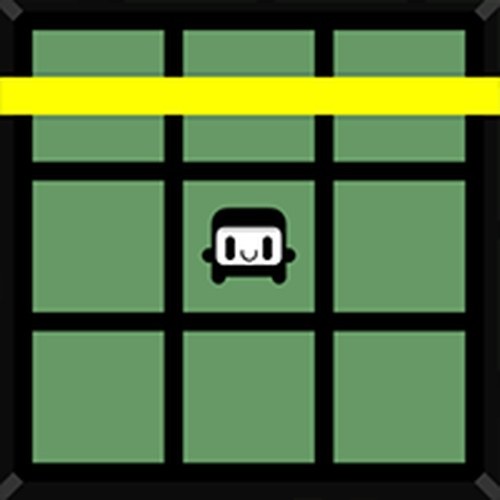
Beam Maze Navigation Puzzle presents a straightforward objective: move a character from a starting point to an exit while avoiding all light beams. What makes this game engaging is the variety in beam behavior. Some beams remain fixed in place, creating static obstacles that require careful path planning. Others sweep across the maze at different speeds, forcing players to wait for openings or find alternative routes. This combination of static and dynamic hazards keeps each level feeling distinct.
Pattern Complexity
As players progress, the arrangement of beams becomes more intricate. Early levels might feature a single moving beam with plenty of open space, allowing newcomers to learn the basic rhythm. Later stages introduce multiple beams that cross paths, narrow corridors with overlapping hazards, and beams that change speed mid-level. The game never relies on random elements; every beam follows a predictable pattern that can be learned through observation. This design rewards patience and attention to detail rather than fast reflexes.
Control Scheme
The controls are intentionally minimal to keep focus on problem-solving. On a computer, the arrow keys handle all movement. Mobile users can tap the screen to direct the character. There are no complex combos or special abilities to manage. This simplicity means players can concentrate entirely on reading the maze and timing their moves. The game provides immediate feedback when a beam is touched, resetting the level so players can try a different approach.
Progression Structure
Difficulty increases gradually across the level set. The early stages serve as a tutorial, introducing one new element at a time. Later levels combine multiple beam types and tighter spaces. The game does not include a timer or score system, so players can take as long as needed to solve each puzzle. This makes it suitable for both quick play sessions and longer focused sessions. Each level can be completed in a few minutes, fitting well into short breaks.
Visual Design
The visual style is clean and uncluttered. Mazes are presented from a top-down perspective with clear color coding that distinguishes safe paths from beam zones. Beams are rendered as bright lines that are easy to see against the background. The character is a simple shape that moves smoothly across the grid. This minimalist approach ensures that the gameplay remains the primary focus without visual distractions.








Player comments
Sign in to comment
You must be logged in before posting a review or rating.
No account? Create one
No comments yet. Be the first to comment!